Jihadist Groups
ISIS and ISIL
The Islamic State of Iraq and Levant, more commonly known as The Islamic State of Iraq and Syria, was formed in 1999 and pledged allegiance to Al Qaeda. They gained traction in 2014 when they successfully overthrew the Iraqi government. Stationed troops from the United States were driven out, and the key city Mosul was under ISIS control. ISIS was able to gather a large following through online propaganda and using religion to justify their actions. Due to the violent actions of ISIS, young men with radical views towards the West are inspired to join ISIS. Many are from ISIS occupied countries, but citizens of the West are influenced by propaganda and defect to the East. Citizens of Iraq, Syria, and Khorasan either flee to the West as refugees, or pledge allegiance to ISIS for food, shelter, and safety.
What solidified ISIS as a threat in the eyes of the West was the Paris attack of November 2015. Three suicide bombers attacked civilians outside of the Stade de France in Saint-Denis, Paris. ISIS Gunmen attacked crowded cafes and restaurants along with a venue which held 1,500 people at the Bataclan Theatre. None of the terrorists survived leaving 130 casualties and 416 injured. The attack was ISIS’ retaliation against French airstrikes in Syria and Iraq. France then began the largest ever bombing campaign against Iraq– Opération Chammal.
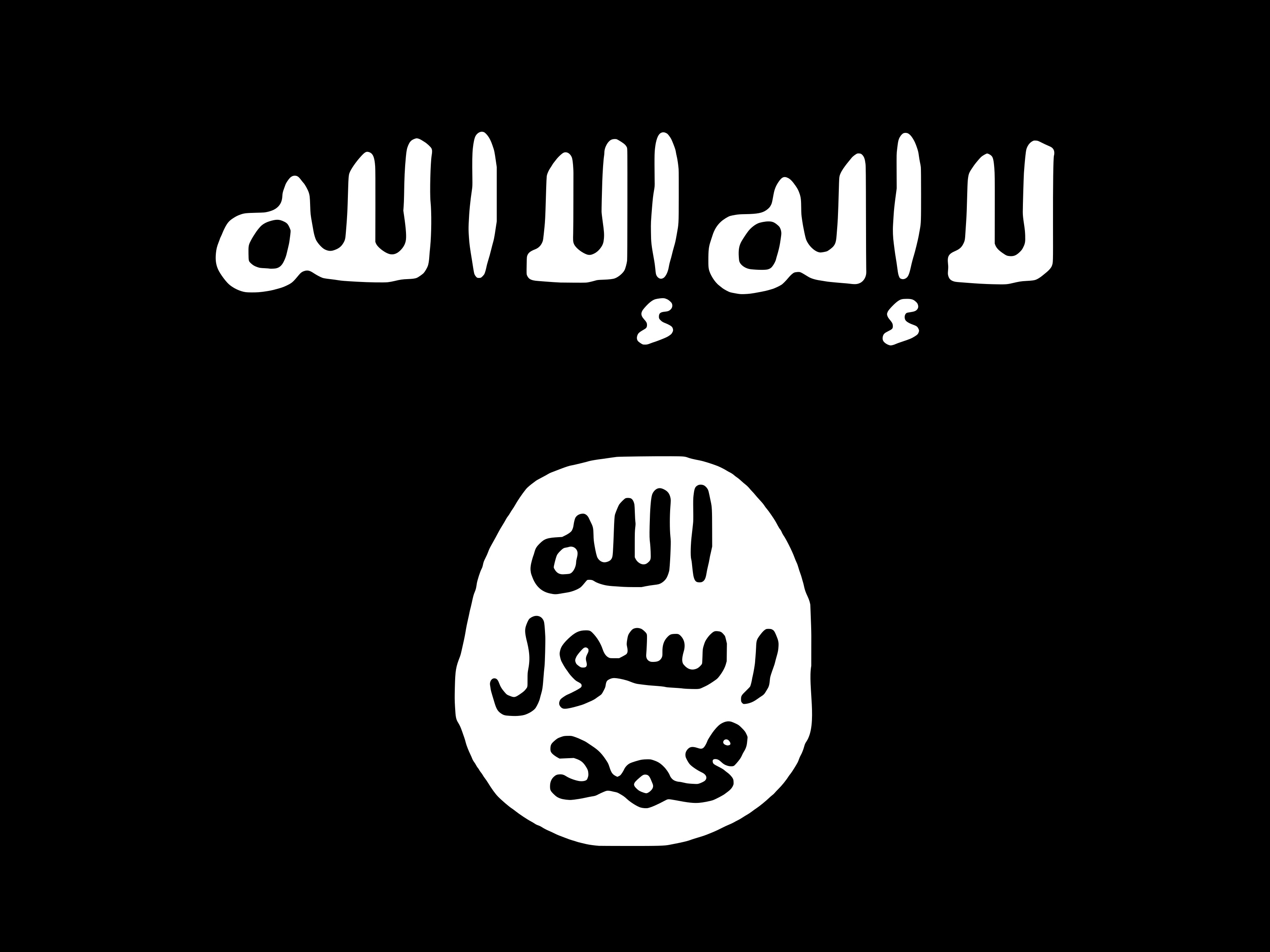
Figure 2-1 One of the many Jihadist flags commonly used by Jihadist groups like ISIS, ISIL, and IS-KP.
Martin Rouleau Couture Incident
On October 24, 2014 in Montreal, Quebec, Martin Rouleau Couture hit 2 Canadian soldiers. One was killed, and the other was left heavily injured. Couture was then shot by the municipal police and died in the hospital the morning after. Prior to this, Martin Rouleau Couture was identified as an important potential terrorist threat. He was arrested in 2013 but not enough evidence was presented to keep him in custody. In 2013, he converted to Islam as well. Couture was not heavily monitored even with signs of him showing radical beliefs against the west.
IS-KP - Hamid Karzai International Airport Attack in Kabul Afghanistan
The attack on the Hamid Karzai International Airport is the most recent act of terrorism committed by ISIS. The airport was especially crowded at the time of the attack since it was the only way out of Afghanistan once the Taliban took control. US military personnel were stationed in Afghanistan before the attack. The Pentagon had sent a warning to the US congress to remove these troops as it would only provoke an attack. Then, on August 26, 2021, a suicide bomber theorized to be part of IS-KP detonated an explosive belt at the airport with gunmen firing into the crowd. The attack claimed the lives of 169 Afghan civilians, 13 US military personnel, and 28 Taliban fighters. With a response to the US losing 13 military personnel, the Taliban planned to retaliate with the capture of the IS-KP leader Shahab al Muhajir. The IS-KP stands in the way of a full militarized control of Afghanistan by the Taliban.

Figure 2-2 A map of Afghanistan in 2021 after US withdrawal of troops from May 5th compared to itself on August 14th.
Al Qaeda and the “Far” War
Al Qaeda was the terrorist group behind the 9/11 attacks on September 11, 2001. Formed in 1988 and defeated by the US in 2014, Al Qaeda was a short-lived threat. However, other groups still carry similar Jihadist ideologies such as ISIS and the Taliban. ISIS pledged allegiance to Al Qaeda in 1999 as they both shared similar goals and enemies. These Jihadist groups have 2 main enemies – the “far” enemy and the “near” enemy. The far enemy is the west and its conflicting ideologies.
The attack on September 11, and global terrorist attacks are how this was fought. In mainly Muslim countries, Jihadist groups try to restore the Islam religion through acts of violence. ISIS focuses more on the near war while Al Qaeda focused on the far war. The near war is more violent and uncontrollable than the far.
In August 2014, The Sinjar Massacre claimed the thousands of Yazidis men, women, and children’s lives. ISIS committed a religious genocide against the Yazidis populated city of Sinjar. This brought the attention of the United Nations. Bombing campaigns commenced on the northern part of Iraq which led to a full-scale invasion by the US. They were able to evacuate of 20,000 to 30,000 Yazidis people to Syria. However, 4,000 – 5,000 Yazidis people were left on the Sinjar Mountain as the UN believed they were no longer at risk.

Figure 2-3 The second tower of the World Trade Center bursts into flames after being hit by a hijacked airplane, September 11, 2001.
Activities
- What is the main demographic of ISIS members and why do they join ISIS?
- What goal did the US and the Taliban share?
- What are the differences in goals for ISIS and Al Qaeda?
- List 2 events that made ISIS a serious threat.
- Do any other people join ISIS?
- What is one example of a “Westerner’s” ideals changing?
- Do you think ISIS will become a larger threat? How will the spread of information through social media affect this?
- Could the Yazidis massacre be compared to Hitler’s final solution? Defend your response with examples.
- Why would the US's prolonged stay in Iraq provoke an attack?